
India processes more corn than most people realise. The crop has quietly shifted from a regional staple to an industrial feedstock – supplying starch to food manufacturers, grits to snack producers, flour to bakeries, and grain to ethanol distilleries. Behind all of it is the milling step: the point where raw corn becomes something usable.
If you are sourcing milled corn products in India – or trying to understand how the industry works before making a procurement decision – this guide covers the process, the market, and what to look for in a supplier.
What is Corn Milling?
Corn milling is the process of cleaning, conditioning, and mechanically processing dried corn kernels into refined fractions – flour, grits, semolina, bran, and germ. The method used determines what you get out.
Dry milling separates the kernel into its structural components without water. It is faster, less capital-intensive, and produces flour, grits, and bran in relatively straightforward fractions. Most food-grade corn flour and corn grits used in India’s snack and feed industries come from dry milling operations. Ethanol distilleries using grain as feedstock also rely on dry-milled grain.
Wet milling uses water and steeping to separate the kernel more precisely – isolating starch, gluten, germ oil, and fibre as distinct streams. It produces higher-purity starch and corn steep liquor as a co-product. Wet milling requires more infrastructure and is typically run at larger industrial scale.
For most buyers in India – whether food processors, feed compounders, or industrial starch users – the relevant question is not just which method but which output specification they need, and whether the supplier’s process can consistently deliver it.
Corn Milling Industry in India
India’s corn output crossed 35 million metric tonnes in recent years, with Andhra Pradesh, Karnataka, Bihar, and Madhya Pradesh as the major producing states. Gujarat and Rajasthan have added acreage as hybrid seed varieties improved yields in drier geographies.
Demand for milled corn products spans several industries:
FMCG and snacks consume large volumes of corn grits and flour – extruded snacks, cornflakes, and tortilla-style products all depend on consistent particle size and moisture specifications from their grain suppliers.
Breweries and distilleries use corn as a fermentation feedstock. The ethanol blending programme has increased grain-based distillery capacity significantly, and corn is one of the primary inputs alongside broken rice and sorghum.
Animal feed takes the largest share of corn by volume. Poultry and aquaculture sectors in particular are sensitive to aflatoxin levels and protein content – quality parameters that start at the milling stage.
Industrial starch users – paper, textiles, adhesives – require specific viscosity and purity grades that only a controlled milling and separation process can reliably supply.
The industry is fragmented at the lower end but consolidating at the mid-to-large scale. Buyers increasingly expect traceability, FSSAI compliance, and consistent quality documentation – things that separate serious operations from commodity traders.
How to Choose the Right Corn Milling Company
Sourcing milled corn products is not the same as buying corn. The supplier’s process, infrastructure, and quality controls directly affect what arrives at your facility.
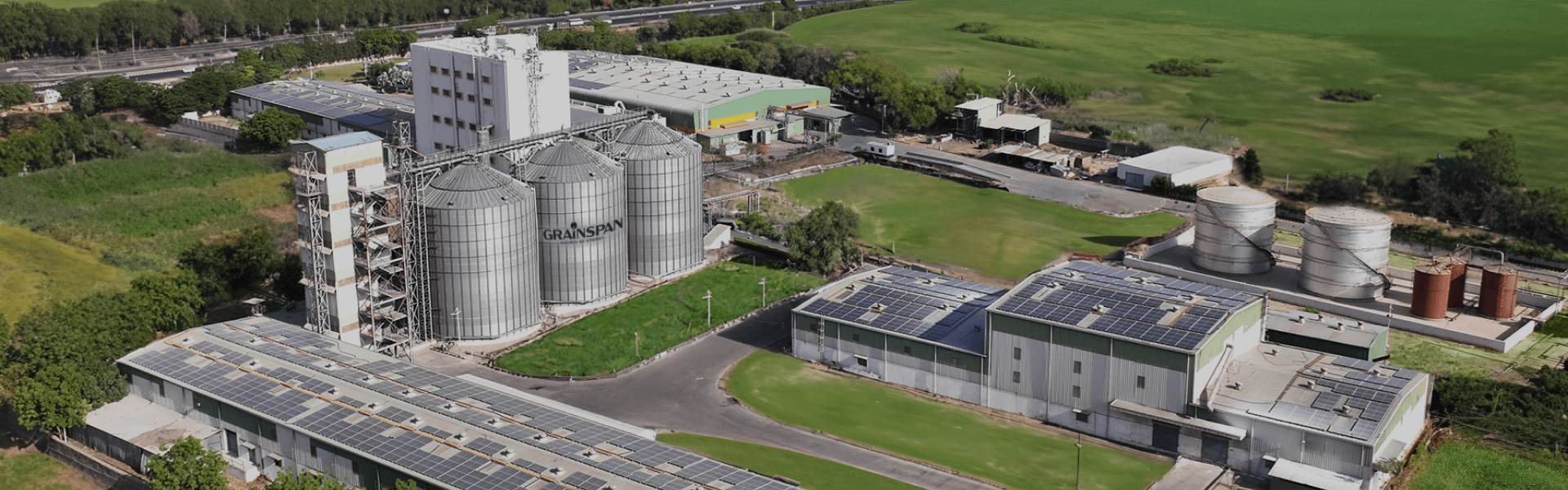
Processing capacity and throughput consistency matter more than installed capacity figures on paper. A plant rated at 200 TPD that runs at 60% utilisation with frequent downtime is a different proposition from one running at steady 85 – 90%. Ask about average daily throughput, not peak capacity.
Technology and equipment determine the precision of separation. Roller mills, plansifters, and aspirators need to be maintained and calibrated. Older equipment tends to produce wider particle size distributions – which is fine for some applications, problematic for others. Find out when the plant last underwent a major equipment overhaul.
Quality standards are non-negotiable for regulated end uses. FSSAI registration is the baseline for any food-grade product in India. ISO 22000 or FSSC 22000 certification indicates a more systematic approach to food safety management. For export or pharmaceutical-grade applications, ask specifically about testing protocols, rejection criteria, and batch traceability.
Customisation capability is often overlooked until it becomes a problem. Standard flour and grits grades work for many buyers, but if your process requires a specific moisture range, particle size, or packaging format, check whether the supplier has handled that before – and whether they can document it.
Applications of Corn Milled Products
Food and beverage is the most visible end use. Corn flour goes into flatbreads, bhakri, and composite flour blends. Coarse grits form the base for extruded snack products. Fine semolina is used in porridge, baby food, and instant mixes. Breweries use corn as an adjunct grain in beer production, where starch content and gelatinisation temperature matter.
Industrial applications are less visible but equally significant by volume. Native corn starch is used in paper sizing, textile warp sizing, and adhesive manufacturing. Modified starches – processed further from native starch – go into food thickeners, pharmaceutical binders, and biodegradable packaging materials.
Animal nutrition uses both the flour fractions and the bran. Corn bran is a fibre source in ruminant rations. Broken or off-spec grain that does not meet food-grade standards still has value in poultry and aquaculture feed, provided aflatoxin levels are within permissible limits.
Ethanol production uses dry-milled grain directly. Starch content per tonne is the key metric – higher starch, more ethanol per batch. The milling step affects how efficiently the starch is exposed and accessible to enzymes in the fermentation process.
Why Choose an Indian Corn Milling Company
Input cost advantage. India’s domestic corn production has grown consistently over the last decade. Local procurement reduces raw material logistics costs for millers, which flows through to competitive ex-works pricing for buyers – particularly relevant for bulk industrial purchasers.
Export capability. Several Indian corn millers supply food-grade products to markets in Southeast Asia, the Middle East, and Africa. The combination of FSSAI compliance, competitive pricing, and available port infrastructure makes India a viable origin for international buyers looking to diversify supply.
Proximity to feedstock. India’s major corn-producing belts in Andhra Pradesh, Karnataka, and Bihar support year-round procurement for millers operating in or near those geographies. Gujarat-based operations benefit from good rail and road connectivity to multiple producing states.
Regulatory environment. The ethanol blending programme, FSSAI’s strengthening of food safety norms, and export promotion schemes have collectively pushed Indian grain processors towards better documentation, testing, and traceability practices. Buyers have more auditability than they did five years ago.
Conclusion
India’s corn milling industry has the scale, the feedstock base, and increasingly the quality infrastructure to serve both domestic and international buyers across food, feed, and industrial applications. The key is finding a supplier whose process, certifications, and track record match your specific requirements – not just one who can offer the right product on paper.
Grainspan Nutrients works with food manufacturers, feed producers, and industrial buyers across India. If you are evaluating corn milled products for your next procurement cycle, we are happy to share product specifications, quality documentation, and pricing.
Get in touch with our team info@grainspan.com