GrainSpan Nutrients is an integrated grain processing company based in Ahmedabad, India. Since our first plant opened in 2014, we have built a vertically integrated operation that converts corn and rice into food-grade ingredients, grain-based animal feed, and bioethanol - supplying food manufacturers, FMCG brands, feed businesses, and export buyers across 19+ countries. GrainSpan operates from three corn and rice…
Rice is one of the most widely consumed food grains in the world, but producing high-quality rice involves much more than simply harvesting paddy. After harvesting, paddy needs to be properly cleaned, dried, processed, milled, graded, and packed before it reaches consumers, retailers, food manufacturers, or commercial kitchens. For farmers, rice traders, food businesses, and distributors, choosing dependable rice milling…
India's grain-processing industry is entering a new phase. Corn and rice are no longer being viewed only as traditional food grains. They are increasingly part of a wider industrial ecosystem that connects food ingredients, animal nutrition, renewable fuel, biofuel and value-added agricultural products. For businesses sourcing grain products from India, this shift creates both opportunities and new considerations. A modern…
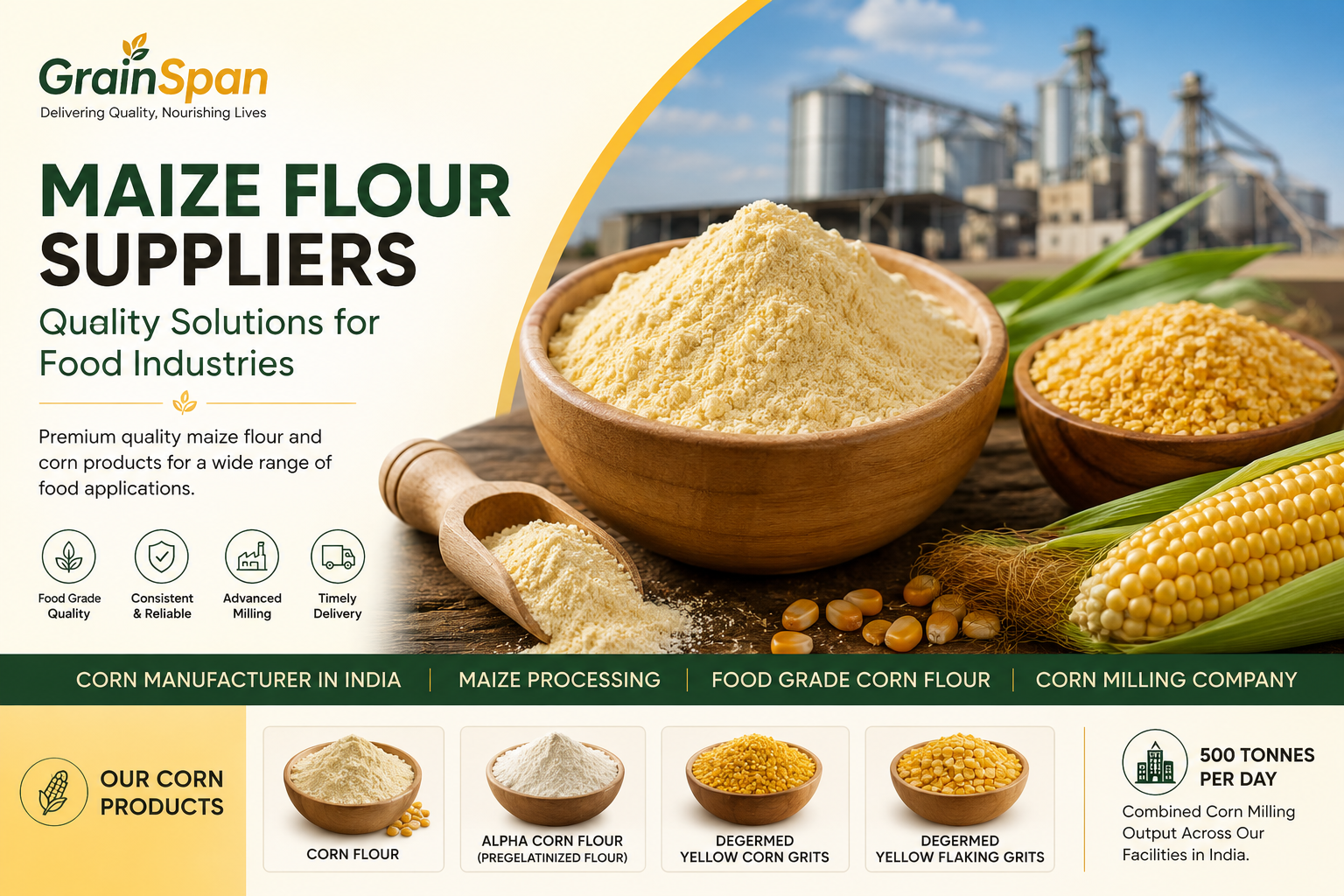
The food manufacturing industry runs on ingredient reliability. A snack line producing 10 tonnes per shift cannot absorb a flour delivery that arrives off-spec on moisture. A breakfast cereal manufacturer running a flaking cooker cannot tolerate grit that varies in particle size batch to batch. Behind every consistent finished food product is a raw material supply chain that performs without…
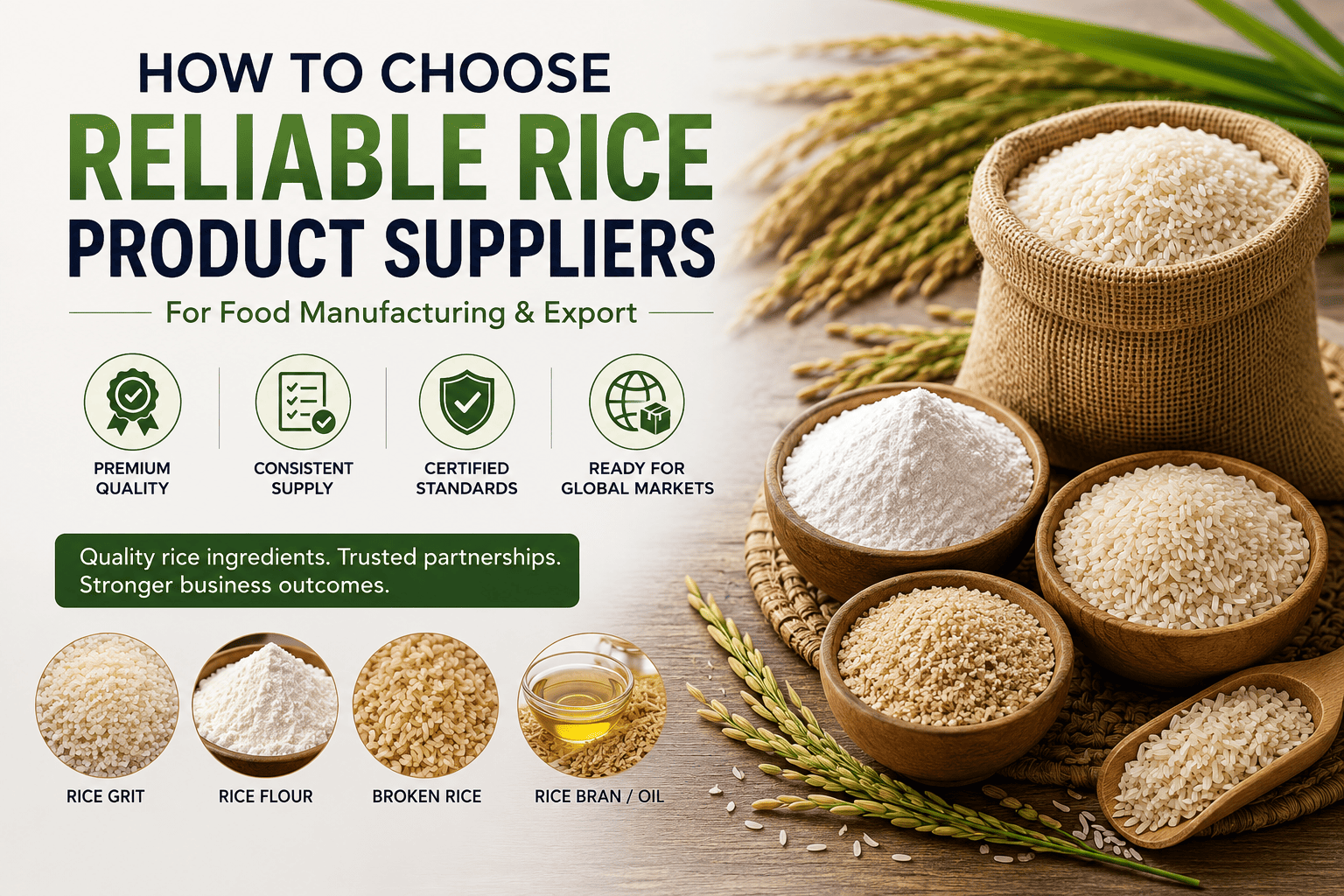
Rice is one of the most processed grains in the world, and the industrial market for rice-derived ingredients is significantly larger than most buyers outside the food industry realise. Rice grit goes into breakfast cereals, weaning food, and snack extrusion. Rice flour goes into gluten-free bakery, batter coatings, baby food, and pharmaceutical manufacturing. Broken rice feeds poultry and goes into…
Corn grit is one of the most widely used cereal ingredients in industrial food manufacturing - and one of the most under-specified. Buyers who know exactly what they need often find it difficult to communicate that precisely to suppliers. Buyers who are less familiar with the product sometimes end up with material that is technically on-spec but performs poorly in…
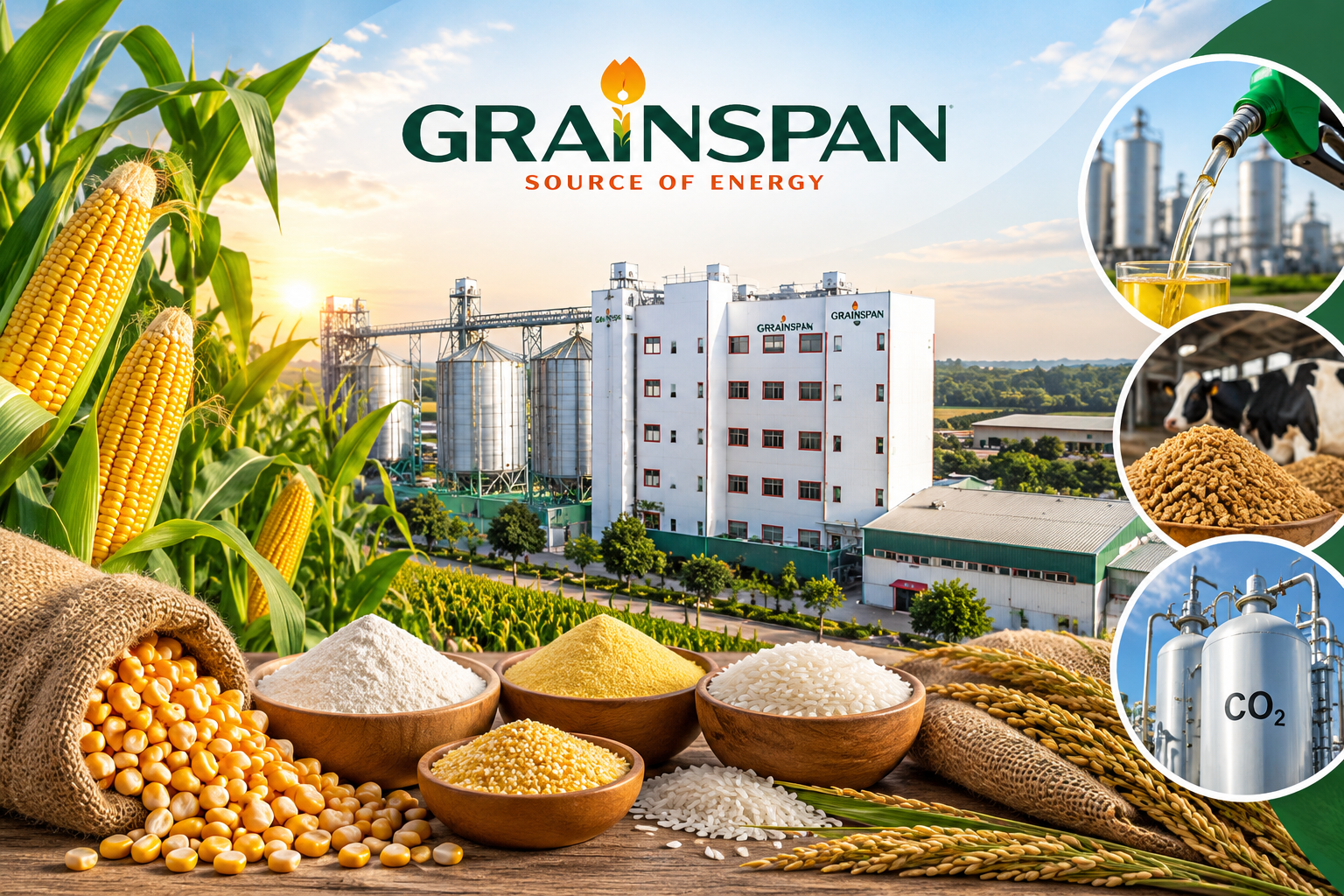
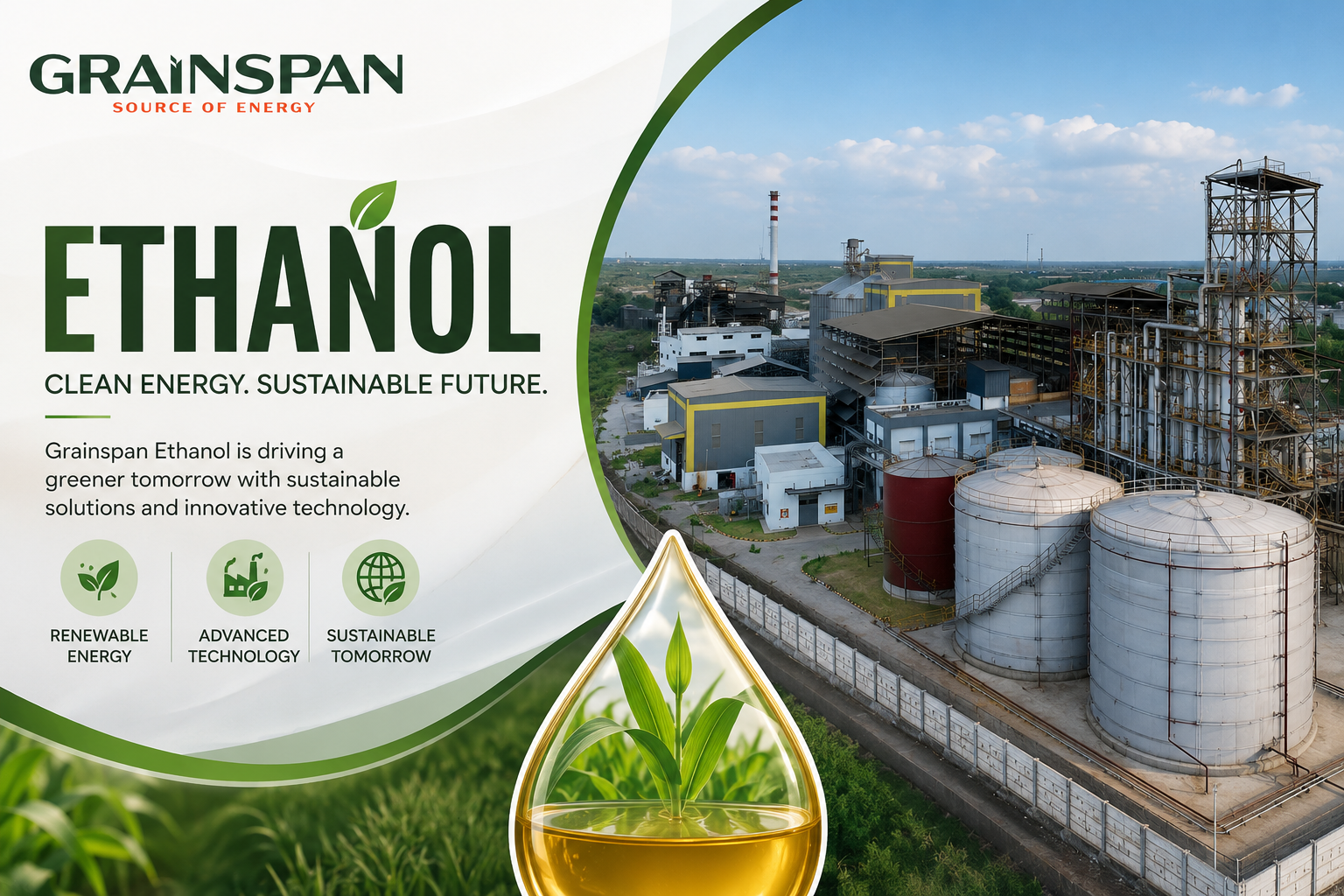
Most people understand that corn can be milled into flour. Fewer realise that the same grain, run through a different process, produces fuel for your car, protein for a dairy cow, gas for a soft drink, and cooking oil - all from one kernel, in one integrated plant. That is what grain-based ethanol production in Gujarat looks like when it…
There is a reason most serious food manufacturers do not mill their own grain. It is not that the technology is inaccessible. It is that running a consistent, certified, food-safe milling operation at commercial scale requires infrastructure, process discipline, and raw material relationships that take years to build – and distract entirely from what a food business is actually good…
India processes more corn than most countries grow. The grain that arrives at a milling plant as raw maize leaves as something entirely different - corn flour for a snack factory, grits heading to a breakfast cereal line, feed ingredients for a poultry farm, and in some plants, fermented into ethanol that ends up blended into the petrol at your…
Rice is the second most produced grain in the world, but most of the industrial value in rice processing sits beyond the white kernel that reaches the dinner table. For food manufacturers, feed businesses, pharmaceutical companies, and cosmetic ingredient buyers, the full range of rice products - flour, bran, bran oil, grits, broken rice, and parboiled derivatives - represents a…