
India produces over 35 million metric tonnes of corn annually, making it one of the world’s top five corn-producing countries. That volume does not just feed livestock. It feeds an entire industrial ecosystem – food manufacturers, distilleries, starch processors, and export traders who depend on a reliable supply of corn-based ingredients.
Corn flour, corn grits, animal feed, and processed corn derivatives now show up in bakeries, snack factories, pharmaceutical plants, and poultry farms across the country and abroad. For B2B buyers and export businesses looking to source these products, the supplier landscape can be hard to navigate. This guide breaks it down: what corn product exporters and corn flour suppliers in India actually offer, how processing works, and what to look for when selecting a long-term partner.
How Corn Processing Works in India
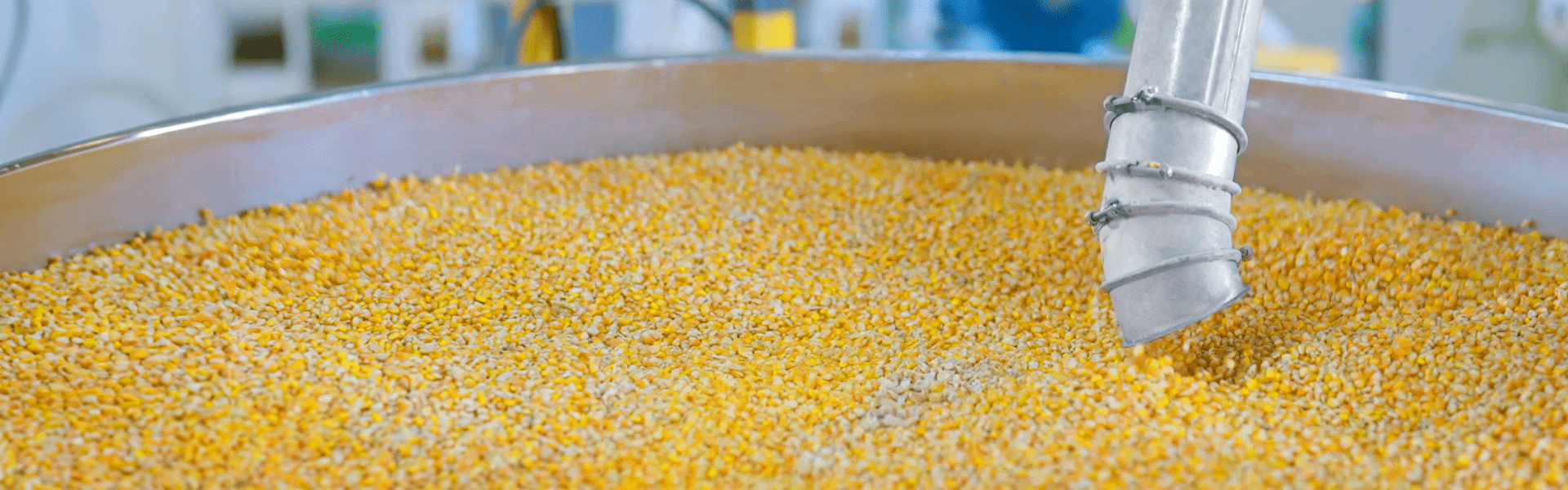
Modern corn processing plants in India run either wet-milling or dry-milling operations, and the output profile differs significantly between the two.
Dry milling – the more common route for food-grade applications – separates the corn kernel into germ, bran, and endosperm without using water as a processing medium. The endosperm is then milled to different particle sizes to produce grits and flour. The germ is extracted separately for oil recovery or further processing.
Corn Germ Processing
Corn germ processing is a distinct sub-segment. The germ, which accounts for roughly 10-12% of the kernel by weight, contains most of the kernel’s oil. Once separated, it goes through solvent extraction or expeller pressing to yield refined corn oil. The residual meal after oil extraction is used in animal feed. In India, germ processing is increasingly integrated into larger dry-milling facilities rather than run as standalone operations, which improves overall plant economics.
The main finished products from a dry-milling plant are: degermed corn grits (in various screen sizes), corn flour (fine and coarse grades), pre-gelatinised or alpha corn flour for specialty applications, and cattle/poultry feed from the bran and germ fractions.
Corn Flour Suppliers in India: What to Expect
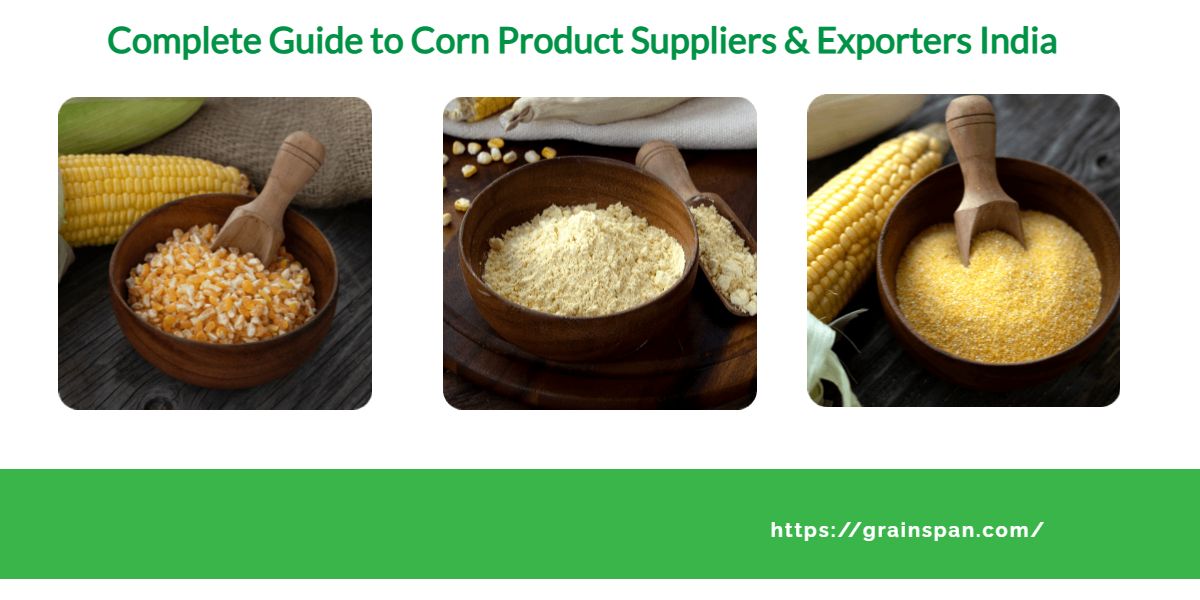
Not all corn flour is the same, and not all corn flour suppliers in India serve the same market. It helps to understand the distinctions before shortlisting vendors.
Regular Corn Flour
Standard yellow corn flour, used in snack coatings, tortillas, cornbread, and porridge mixes. Most domestic suppliers stock this as their core SKU.
Bulk Corn Flour Suppliers
Bulk corn flour suppliers typically operate at 100+ MT per month and offer flexible packaging – from 25 kg bags to jumbo sacks and even tanker-grade bulk supply for large factories. If you are a food manufacturer running continuous production, sourcing from a bulk supplier rather than a trader makes logistical and cost sense.
Industrial Corn Flour Manufacturers
Industrial corn flour manufacturers produce specialty grades – pre-gelatinised (alpha) corn flour for instant food applications, high-viscosity grades for adhesive or paper industries, and customised particle size distributions for specific processing requirements. These are not commodity products; they are made-to-spec and priced accordingly.
Corn Grits and Processing Machinery
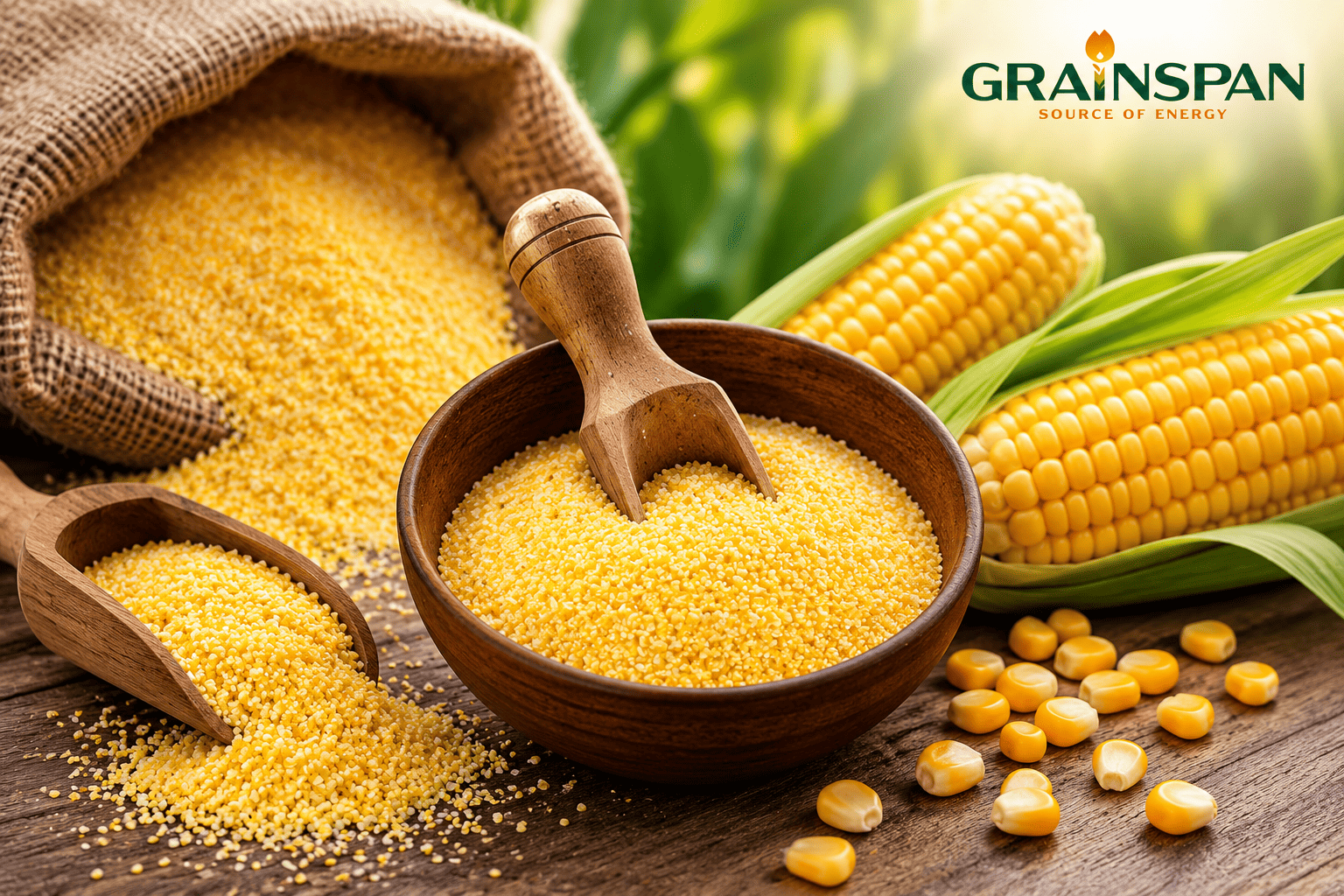
Corn grits are degermed, broken endosperm particles screened to specific size ranges. In food manufacturing, they are the base ingredient for breakfast cereals, brewing adjuncts, extruded snacks, and corn-based pasta. In industrial brewing, coarse corn grits are used as a partial malt substitute.
India has a growing number of corn grits exporters who serve buyers across Southeast Asia, Africa, and the Middle East. The typical export specification is degermed yellow corn grits with moisture below 13%, ash below 0.5%, and particle size confirmed by screen analysis.
Corn Grits Machine Manufacturers in India
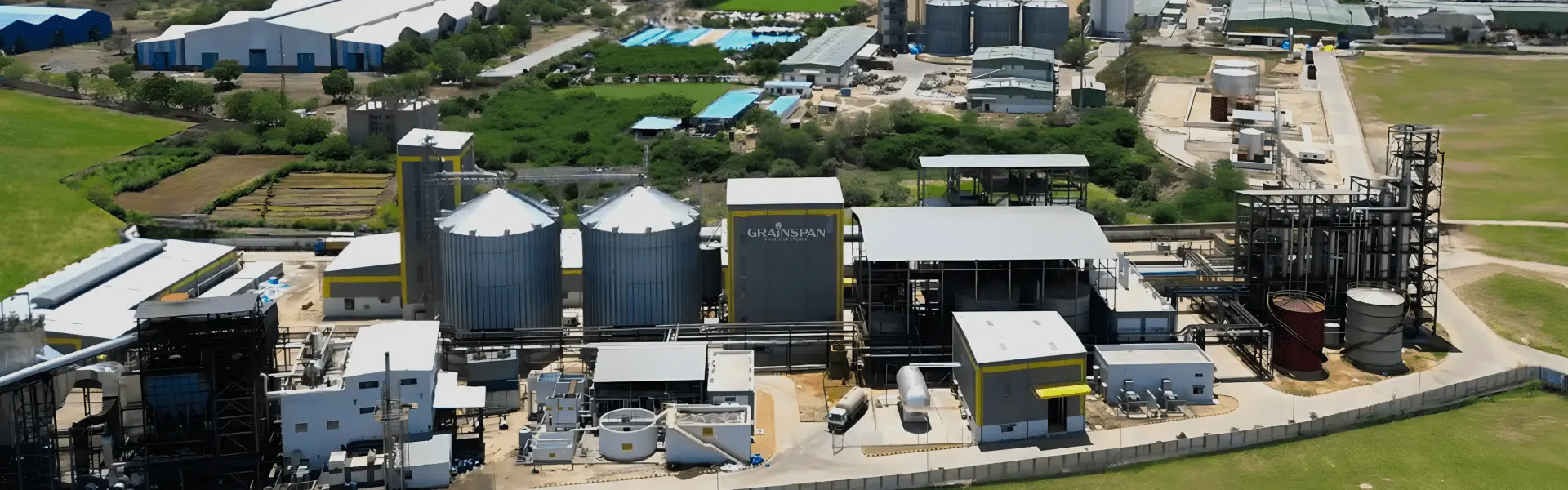
The processing equipment side has also matured. Corn grits machine manufacturers in India now produce degerminator-mill lines, roller mills, plansifters, and integrated dry-milling plants that can compete with European equipment on throughput, even if the automation level sometimes differs. Buyers setting up new milling lines have a real domestic option today – lead times are shorter and after-sales support is easier to arrange.
Modern automated milling plants run with PLC controls, real-time yield monitoring, and in-line moisture sensing. For a buyer evaluating machine suppliers, ask specifically about degermination efficiency (expressed as germ separation rate) and energy consumption per tonne of output.
India’s Role as a Corn Product Exporter
India’s corn product exporters have expanded their reach considerably over the last decade. Processed corn products – particularly corn grits, corn flour, and starch derivatives – now go to over 50 countries. The top destinations include Bangladesh, Vietnam, Indonesia, Nepal, Sri Lanka, and several African markets.
The competitive advantage is straightforward: India has a large domestic corn surplus in most years, processing infrastructure has improved, and labour costs remain lower than in competing origins like the US or Argentina for value-added processing. Freight economics also favour Indian suppliers for Asian and African buyers compared to transatlantic shipments.
Export-focused manufacturers typically hold FSSAI certification, APEDA registration, and ISO 22000 or equivalent food safety certifications. For buyers requiring Halal or Kosher certification, these are available from certain manufacturers on request.
Animal Feed Manufacturers and Corn’s Role in the Feed Industry
Corn is the most important energy ingredient in compound feed across poultry, dairy, and livestock sectors. In India, corn accounts for roughly 50-60% of poultry feed formulations by weight. That makes proximity to a corn processing plant a genuine operational advantage for feed manufacturers.
The by-products from corn dry milling – bran, germ meal, and DDGS (distillers dried grains with solubles) from ethanol co-production – are high-value feed ingredients in their own right. DDGS, for instance, runs 26-30% crude protein and is used as a partial soya substitute in poultry and cattle rations.
Animal feed manufacturers sourcing from an integrated corn processor get two benefits: access to primary corn-based grains and co-products from the same supply chain, which simplifies procurement and can reduce logistics cost.
How to Choose the Right Corn Supplier or Exporter
For B2B buyers, the choice of supplier affects more than just price. Here are the factors that matter in practice.
- Production capacity and reliability: A supplier running a 100 MT/day plant cannot reliably service a buyer needing 500 MT/month at peak demand. Ask for installed capacity, typical utilisation rate, and buffer stock policy.
- Certifications: FSSAI is a minimum for domestic food-grade supply. For export buyers, check APEDA registration, phytosanitary compliance, and any destination-specific requirements (EU, GCC, ASEAN).
- Consistent product specs: Request a QC protocol document, not just a CoA. Understand how they handle batch-to-batch variation in moisture, granulation, and colour – these matter for food manufacturers running tight process parameters.
- Logistics capability: Can they handle FCL exports, arrange for container stuffing at plant, and provide pre-shipment inspection access? For domestic buyers, what are the standard credit and ex-factory terms?
- Transparency on raw material sourcing: Traceability to the originating grain is increasingly a customer requirement. Suppliers who can trace corn back to specific mandis or procurement regions are better positioned for audit-grade supply chains.
Conclusion
India’s corn processing industry has the scale, the infrastructure, and the product range to serve serious B2B buyers – whether you are sourcing corn flour for a bakery chain, corn grits for a brewing operation, animal feed ingredients for a poultry company, or setting up a processing plant and need machinery.
The difference between a good and a poor sourcing decision usually comes down to due diligence on capacity, certifications, and supply consistency – not just landed cost. Work with suppliers who can demonstrate their process controls, not just quote a price.
For inquiries about corn grits, corn flour, or animal feed products from a manufacturer with multi-plant operations across India, contact GrainSpan Nutrients to discuss your requirements.
Frequently Asked Questions
1. What is corn flour used for?
Corn flour is used across food manufacturing (snack coatings, batters, flatbreads, porridge mixes), industrial baking (as a wheat flour extender or gluten-free base), and specialty applications like pre-gelatinised corn flour in instant soups and ready-to-eat mixes. Industrial grades also go into paper and adhesive manufacturing.
2. Who are the top corn product exporters in India?
Leading corn product exporters in India are concentrated in states with strong corn procurement bases – Gujarat, Karnataka, Andhra Pradesh, Telangana, and West Bengal. Exporters tend to be integrated manufacturers (as opposed to traders) who hold APEDA registration and can meet food safety requirements for Asian and African destination markets.
3. What is corn germ processing?
Corn germ processing refers to the extraction and refining of the germ fraction separated during corn dry milling. The germ is rich in oil (roughly 45-50% oil content by weight) and is processed either by solvent extraction or mechanical pressing. The output is refined corn oil, used in food and cooking applications, and defatted germ meal, which is used in animal feed.
4. What certifications should I look for in a corn flour supplier?
For domestic supply in India, FSSAI certification is mandatory. For export, look for APEDA registration and ISO 22000 or FSSC 22000 food safety management certification. Buyers in the GCC or Southeast Asia may also require Halal certification. For phytosanitary compliance, check that the supplier can provide plant health certificates issued by the relevant Indian authority.
5. What is the difference between corn grits and corn flour?
Corn grits are coarsely ground, degermed endosperm particles – typically screened between 1.0 mm and 3.5 mm depending on the grade. Corn flour is ground finer, usually below 200 microns, and is used where a smooth texture or fine coating is needed. Both come from the same raw material; the difference is particle size and application.