
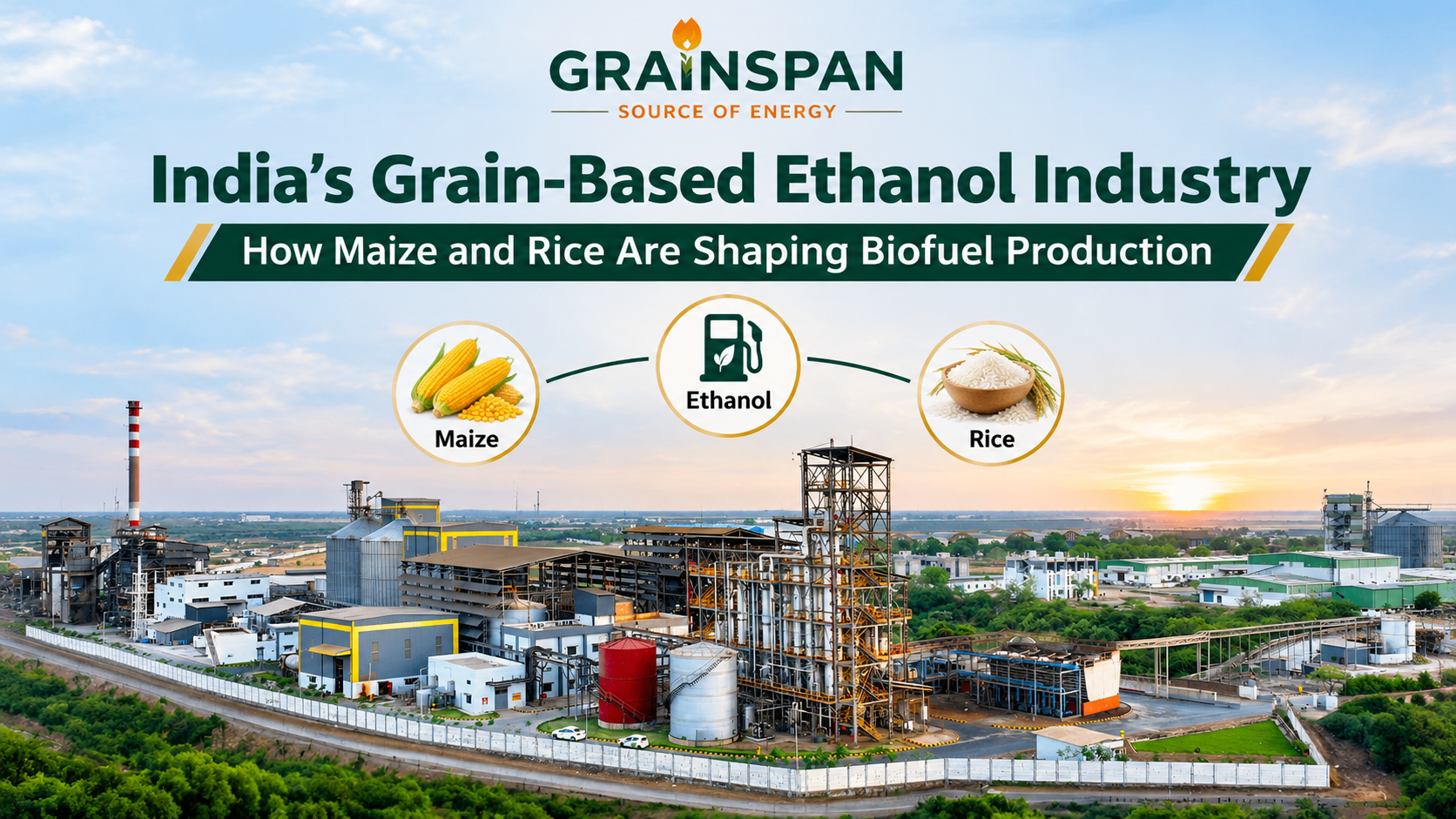
A decade ago, most ethanol manufacturers in India were sugar mills with a distillery attached. That has changed fast. Grain-based feedstocks made up about 71% of the ethanol received in Ethanol Supply Year (ESY) 2025-26 through September, and maize alone contributed over 41%. For anyone following biofuel producers in India, as a co-product buyer, feedstock supplier or partner, the conversation is now about maize, rice and plants built to run on them all year. ianslive
This guide covers how grain-based ethanol production works, why these two grains matter, what the blending programme means for manufacturers, and how to evaluate an ethanol manufacturing company before you commit.
Want to know more about GrainSpan’s grain-based ethanol operations in Gujarat? Reach out to our team.
Why India Needs Alternative Fuel
India imports most of its crude oil, so every litre of ethanol blended into petrol is a litre of crude not bought. The Ethanol Blending Programme turned that logic into policy. Blending rose from 1.14 percent in 2014-15 to 20 percent in ESY 2025-26. India crossed E20 in November 2025 and it became mandatory in April 2026. The next phase is already on paper, with BIS notifying standards for blends beyond E20, including E22, E25, E27 and E30.
Understanding Grain-Based Ethanol Manufacturing
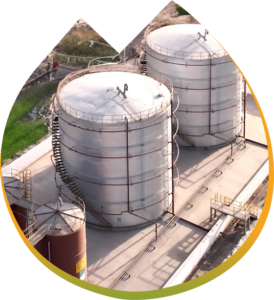
Grain is received, stored, cleaned and milled to expose the starch. Enzymes liquefy the starch and convert it into fermentable sugars. Yeast ferments those sugars into a weak ethanol solution, and distillation plus dehydration brings it up to fuel-grade anhydrous ethanol, the specification oil marketing companies buy for blending.
What separates a good plant from an average one is what happens to everything else. A grain distillery has three co-products worth planning around:
- DDGS (dried distillers grains with solubles): the protein-rich feed ingredient left after fermentation. Rice DDGS is preferred for poultry and aquaculture because of digestibility, while maize DDGS goes mainly into cattle and dairy feed.
- DCO (distillers corn oil): oil recovered as part of the ethanol process.
- Food-grade CO₂: captured at the fermentation stage, not bolted on at the end of the line.
Why Maize and Rice Are Important Ethanol Feedstocks
Both grains are starch-rich, can be stored, and get policy support. Molasses plants follow the sugar season. Grain plants can run through the year if storage and procurement back them up.
Maize has moved fastest. Its share of ethanol production rose from 6.2 percent in ESY 2022-23 to nearly 50 percent in ESY 2024-25. In ESY 2025-26 it stayed the largest single feedstock at 413 crore litres through September, with surplus FCI rice next at 222 crore litres. theprintianslive
Rice-based ethanol production leans heavily on surplus FCI stock, so volumes follow government allocation. That allocation rose from 5.2 million tonnes in ESY 2024-25 to 7.2 million tonnes in ESY 2025-26. Rice yields roughly 450 litres per tonne against about 380 for maize, though real recovery depends on grain quality and plant efficiency. Pricing also steers the mix: for ESY 2025-26 maize-based ethanol was priced at Rs 71.86 per litre and FCI rice ethanol at Rs 60.32. Add The Wire As Your Trusted Source +2
India’s Ethanol Blending Programme and Its Impact on Manufacturers
Oil marketing companies contract volumes for each supply year at administered prices, which gives producers visibility on offtake and price before the year begins. That is rare in commodity businesses.
It also explains how much capacity has been built. Installed capacity reached nearly 19.9 billion litres by December 2025. Against that, supplies hit 987 crore litres by the end of September 2026, about 82.5 percent of the 1,197 crore litres contracted. Capacity sits well above contracted volume, so plants with better feedstock access and tighter operations will stay closer to full utilisation. thewireiamrenew
Emerging Opportunities and Challenges for Ethanol Producers
Opportunities
- A blending pathway beyond E20, with standards for higher blends already notified
- Co-product revenue from DDGS, DCO and CO₂, which cushions the administered ethanol price
- Integration with grain milling for procurement and storage advantages
Challenges
- Feedstock cost, since maize competes with food, feed and starch users while rice depends on FCI allocation
- Policy dependency on offtake volumes and administered prices
- Capacity running ahead of contracted demand
- Water use, which needs serious planning at plant level
How Modern Grain Processing Supports Ethanol Production
A distillery is only as steady as its grain supply. Buying large volumes of maize and rice, storing them without quality loss, cleaning them properly and sourcing across seasons is milling-company work, and it is where GrainSpan started.
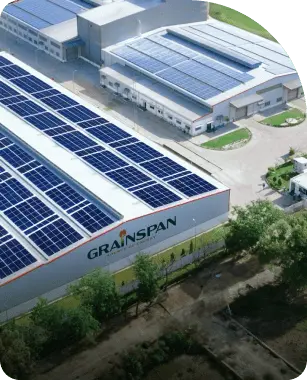
We opened our first plant in Ahmedabad in 2014. Today corn and rice milling runs at three plants, in Ahmedabad (Gujarat), Gohana (Haryana) and Kolkata (West Bengal), with 1,000 MT per day of combined capacity and 75,000 MT of storage. That grain-handling depth carried into ethanol. GrainSpan was the first grain-based ethanol producer in Gujarat, commissioning its first plant in 2023 and its second in 2025. Together they produce 350 KLPD, and we are actively expanding. DDGS (dried), DCO and food-grade CO₂ come from the same operation.
Looking for an ethanol manufacturer or co-product supplier in Gujarat? Contact GrainSpan to discuss your requirement.
What to Consider When Selecting an Ethanol Manufacturer
- Offtake track record: supply history with oil marketing companies, not just installed capacity
- Feedstock security: procurement relationships and storage depth
- Plant utilisation: how consistently the plant runs through the year
- Co-product handling: whether DDGS, DCO and CO₂ are produced and sold systematically
- Certifications and compliance: documented quality and safety systems
- Growth plans: a manufacturer that is expanding is investing in the long term
FAQs About Grain-Based Ethanol Production
Which grains are used to make ethanol in India?
Mainly maize and rice, with the rice largely surplus FCI stock, plus damaged food grains. Sugarcane juice and molasses supply the rest.
How much of India’s ethanol comes from grain?
About 71 percent of ESY 2025-26 receipts through September came from grain-based feedstocks. ianslive
What is the difference between maize-based and rice-based ethanol production?
Feedstock availability, yield and administered price differ. Maize is the larger and more market-driven feedstock, while rice depends on FCI allocation. The DDGS also suits different animals.
What are the co-products of grain-based ethanol?
DDGS for animal feed, DCO (distillers corn oil), and food-grade CO₂ captured during fermentation.
What comes after E20?
India crossed E20 in November 2025 and it became mandatory in April 2026. BIS has notified standards for E22, E25, E27 and E30 blends.
To discuss ethanol, DDGS, DCO or CO₂ supply from GrainSpan, get in touch with our team.