
India is in the middle of a deliberate and large-scale shift away from fossil fuel dependency in road transport. At the centre of that shift is ethanol – and the biofuel producers in India who manufacture it. The country’s Ethanol Blending Programme (EBP) has set a target of 20% ethanol blending in petrol by 2025-26, up from under 2% a decade ago. That target has pushed ethanol production capacity to approximately 1,380 crore litres annually, drawing in investment from sugar mills, grain-based distilleries, and public sector oil companies. This article covers the key categories of biofuel producers and ethanol manufacturers in India, their production methods, their economic role, and the challenges shaping the sector.
Internal link placeholder – GrainSpan Nutrients – Ethanol Division [/ethanol]
GrainSpan Nutrients operates grain-based ethanol production at 350 KLPD combined capacity in Gujarat. Contact us to learn more about our bioethanol supply and co-products.
India’s Biofuel Landscape: The Policy Foundation
The National Policy on Biofuels (2018, revised 2022) and the EBP managed by oil marketing companies (OMCs) – Indian Oil Corporation, Bharat Petroleum, and Hindustan Petroleum – form the commercial backbone of India’s biofuel ecosystem. The OMCs procure ethanol from producers at government-administered prices, which are set annually based on feedstock type. This administered pricing model is what makes ethanol production economically viable for producers and has driven the rapid capacity expansion seen since 2018.
The policy distinguishes between feedstock categories – C-heavy molasses, B-heavy molasses, sugarcane juice, and grain-based ethanol all of which receive different procurement prices. Grain-based ethanol, produced from corn, broken rice, and other food grains, has seen the steepest capacity growth because grain feedstock is available year-round, unlike molasses, which is seasonal and tied to the sugar production cycle.
Key Categories of Biofuel Producers and Ethanol Manufacturers in India
Sugar Mill-Based Ethanol Producers
Historically, India’s ethanol supply was dominated by molasses-based production attached to sugar mills. Sugar mills in Uttar Pradesh, Maharashtra, Karnataka, and Gujarat convert either C-heavy or B-heavy molasses – by-products of sugar crystallisation – into ethanol. Molasses-based producers have the advantage of integrated operations: the ethanol plant sits adjacent to the sugar mill and uses its own feedstock.
The limitation is seasonality. Sugarcane crushing runs for roughly 5-6 months per year, which means molasses-based ethanol plants either stop during the off-season or need to store large molasses volumes. Several integrated sugar producers have addressed this by installing grain-based distillery capacity alongside their molasses lines to run year-round.
Grain-Based Distilleries
Grain-based ethanol manufacturers in India ferment starch-rich grains – primarily corn (maize) and broken rice – into ethanol using enzyme-based saccharification and yeast fermentation. This is the fastest-growing segment of biofuel production in India. Grain feedstock is available 12 months a year, which supports continuous plant operation and higher asset utilisation versus seasonal molasses plants.
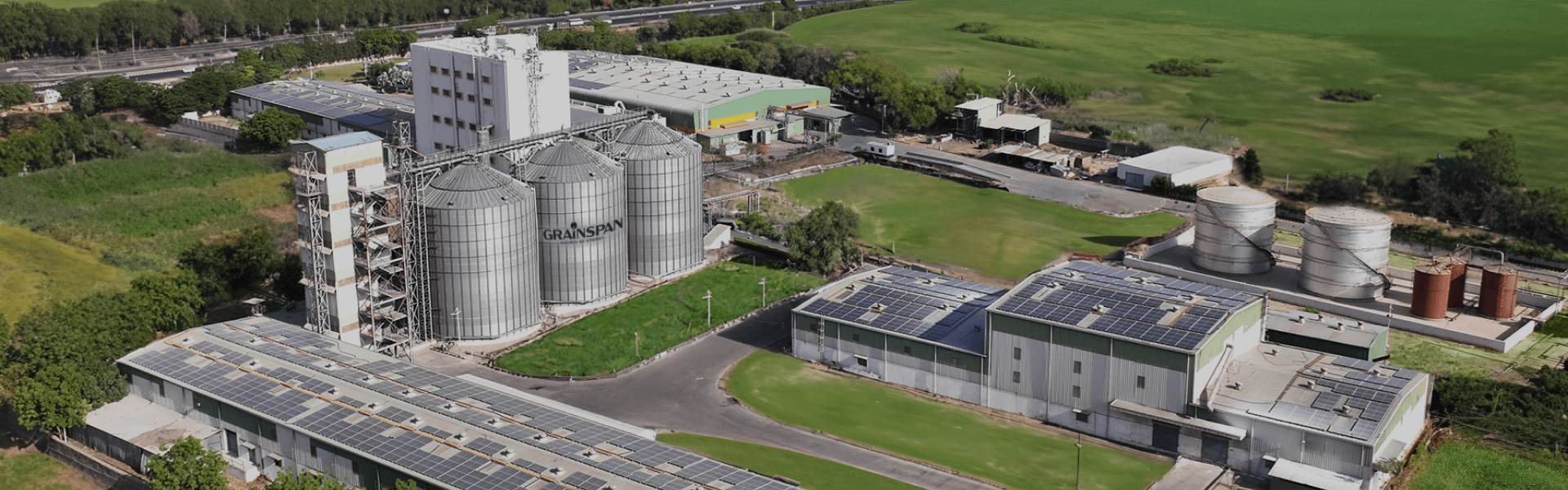
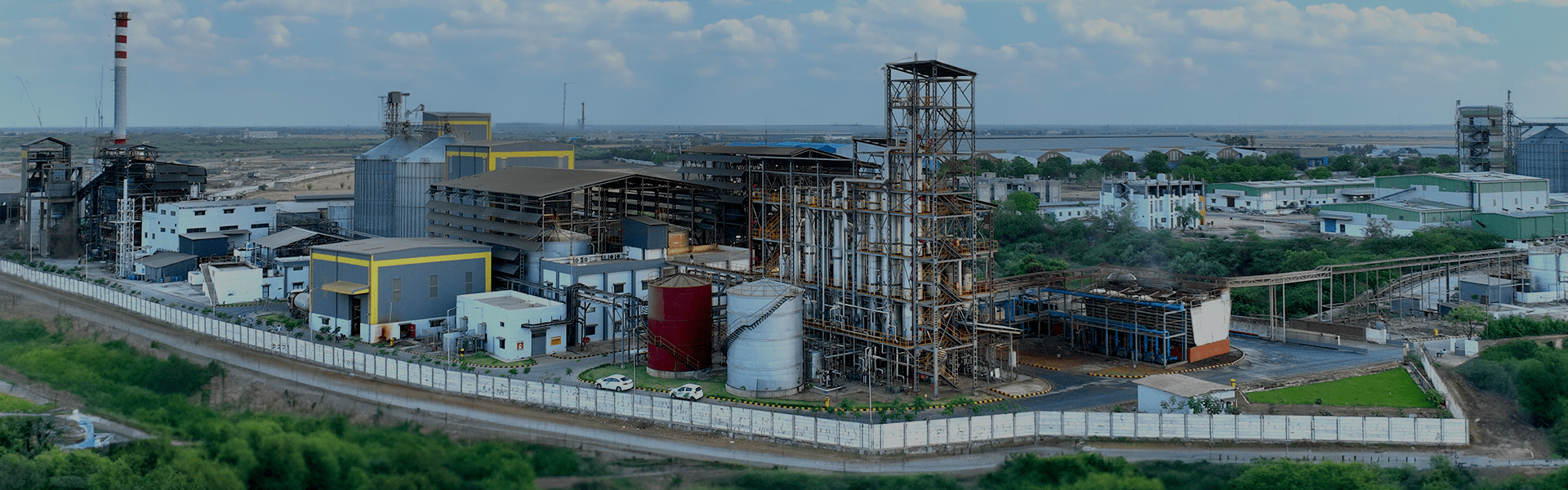
GrainSpan Nutrients operates grain-based bioethanol production at two plants in Gujarat – Plant 1 at 110 KLPD and Plant 2 at 240 KLPD – for a combined capacity of 350 KLPD. Both plants use corn as the primary feedstock and supply ethanol to OMCs under EBP contracts. Co-products from the distillation process include DDGS (distillers dried grains with solubles), liquid CO2, and distilled corn oil – all of which have commercial value in animal feed and food industries.
Public Sector and Oil Marketing Companies
Indian Oil Corporation (IOC), Bharat Petroleum (BPCL), and Hindustan Petroleum (HPCL) are not ethanol producers in the manufacturing sense – they are the buyers and blenders. These OMCs procure ethanol from producers, blend it with petrol at their terminals, and distribute blended fuel through their retail networks. However, some OMCs have also invested in or partnered with biofuel production ventures, particularly in the second-generation (2G) ethanol space using agricultural residue as feedstock.
Emerging Advanced Biofuel Companies
A small but growing number of biofuel companies in India are working on second-generation (2G) ethanol from non-food feedstocks – rice straw, bagasse, corn stover, and municipal solid waste. These technologies use lignocellulosic conversion rather than starch fermentation and are at various stages of commercialisation. IOC’s 2G plant in Panipat (Haryana) is the most prominent example at an industrial scale. Advanced biofuel startups working on algae-based biodiesel, biogas-to-methanol, and sustainable aviation fuel (SAF) are also active in India, though most remain at pilot or demonstration scale.
Interested in GrainSpan’s bioethanol operations or co-product supply (DDGS, CO2, distilled corn oil)? Get in touch with our team.
India’s Ethanol Production Capacity and Growth
India’s installed ethanol production capacity reached approximately 1,380 crore litres (13.8 billion litres) by 2023-24. Actual production and supply to OMCs in 2023-24 was approximately 720 crore litres, implying significant headroom between installed capacity and operating utilisation. The gap reflects feedstock constraints – particularly on grain-based supply, where government allocation and pricing influence how much corn and rice distilleries can procure economically.
The shift from molasses-based to grain-based ethanol has been the defining trend of the last four years. Grain-based ethanol’s share of total EBP supply has grown from under 5% in 2019-20 to over 25% in 2023-24, driven by new distillery investments and the higher year-round availability of grain feedstock compared to molasses.
For India to reach the E20 target at scale, total ethanol supply to OMCs needs to roughly double from current levels. This means continued investment in new distillery capacity, better feedstock allocation policy, and solutions to the seasonal availability problem in the sugar-molasses segment.
Economic Role of Biofuel Producers
India’s ethanol programme is not purely an energy policy – it has a parallel agricultural economics rationale. Corn farmers in states like Karnataka, Andhra Pradesh, Telangana, and Rajasthan benefit from distillery demand as an additional procurement channel alongside feed and food industries. When corn prices are weak, distillery demand provides a price floor. When surplus rice is available, the government channels it to grain-based ethanol producers at administered prices, supporting MSP objectives.
Rural employment is a secondary benefit. Grain-based distilleries are capital-intensive but generate employment in procurement logistics, plant operations, and co-product handling. A 200-300 KLPD plant typically employs 100-200 people directly and supports several times that in logistics and agricultural supply chain roles in its catchment area.
Challenges Facing Biofuel Producers in India
- Feedstock availability and pricing: Grain-based distilleries depend on government allocation of corn and rice at administered prices. In years of tight grain supply or when competing demand from food and feed industries pushes up open market prices, distillery margins compress. Producers without backward integration into grain procurement face the most risk.
- Policy dependency: The entire economics of ethanol production rests on OMC procurement prices set by the government. Any reduction in procurement prices, delay in price revision, or reduction in blending mandates directly impacts producer viability. This creates a business risk that grain-based distilleries manage by diversifying into co-products whose prices are market-determined.
- Seasonal supply-demand imbalance: Molasses-based producers face off-season shutdowns; grain-based producers face seasonal corn procurement constraints post-harvest. Managing feedstock inventory across seasons requires significant working capital.
- Water consumption: Grain-based distilleries are water-intensive. In water-stressed states, this creates operational and regulatory risk. Zero liquid discharge (ZLD) systems are increasingly required and add to capex.
- Infrastructure gaps: Ethanol is corrosive and requires dedicated tankage, pipelines, and blending infrastructure at OMC terminals. In regions where this infrastructure is limited, ethanol movement adds logistical cost and delay.
Future Outlook for Biofuel Producers in India
The trajectory for biofuel producers in India is broadly positive, anchored by firm government commitment to E20 and the longer-term aspiration for E30 in premium fuels. The economics improve as blending volumes scale – higher OMC demand supports better capacity utilisation across the existing distillery base.
The bigger medium-term question is whether 2G ethanol from agricultural residue can move from pilot-scale to commercial viability. If it does, it would relieve feedstock pressure on food grain-based producers and open up a much larger addressable feedstock pool. Until then, grain-based distilleries like GrainSpan – with year-round operating capacity, established OMC supply relationships, and co-product revenues that partially hedge ethanol price risk – are among the more resilient business models in the biofuel sector.
GrainSpan Nutrients is an active grain-based ethanol manufacturer supplying OMCs under India’s EBP. To learn more about our ethanol capacity, co-products, or supply partnerships, contact our team.
Frequently Asked Questions
-
What is India’s ethanol blending target?
India’s target under the Ethanol Blending Programme (EBP) is 20% ethanol blending in petrol (E20) by 2025-26. As of 2023-24, blending levels had reached approximately 12-13% on a national average basis. The government has also indicated a longer-term aspiration toward E30 in premium fuel segments.
-
What feedstocks do grain-based ethanol manufacturers in India use?
The primary feedstocks for grain-based ethanol production in India are corn (maize) and broken rice. Both are starch-rich grains that can be converted to ethanol through enzyme saccharification followed by yeast fermentation. Corn is preferred for year-round continuous production; broken rice is used when it is available at government-allocated prices under surplus grain schemes.
-
What are the co-products of grain-based ethanol production?
The main co-products from a grain-based distillery are: DDGS (distillers dried grains with solubles – a high-protein animal feed ingredient), liquid CO2 (captured from fermentation and sold to food and beverage, welding, or fire suppression industries), and distilled corn oil (recovered from the DDGS stream, used in food processing and biodiesel). These co-products materially improve plant economics by diversifying revenue beyond ethanol.
-
How are ethanol prices determined in India?
Ethanol prices for supply to OMCs are set by the Cabinet Committee on Economic Affairs (CCEA) and revised annually. Prices vary by feedstock type – C-heavy molasses, B-heavy molasses, sugarcane juice, damaged grain, and corn/rice-based ethanol each have different administered prices. For 2023-24, the price for grain-based ethanol was set at Rs 71.86 per litre. Market-rate ethanol for industrial use (chemicals, pharma, sanitisers) is priced separately.
-
What is the difference between first-generation and second-generation ethanol?
First-generation (1G) ethanol is produced from food or feed crops – sugarcane, corn, rice, wheat – using the crop’s sugar or starch as the fermentation substrate. Second-generation (2G) ethanol uses non-food lignocellulosic biomass – rice straw, sugarcane bagasse, corn stover, wood chips – and requires more complex enzymatic or thermochemical pretreatment to break down the cellulose and hemicellulose into fermentable sugars. 2G ethanol avoids the food-versus-fuel conflict but is currently more expensive to produce at a commercial scale.