
There is a reason most serious food manufacturers do not mill their own grain. It is not that the technology is inaccessible. It is that running a consistent, certified, food-safe milling operation at commercial scale requires infrastructure, process discipline, and raw material relationships that take years to build – and distract entirely from what a food business is actually good at.
Professional rice milling services and maize processing companies in India exist precisely to absorb that complexity. A good one gives you consistent corn grit and rice flour on time, to spec, with the paperwork in order – so your production line runs and your procurement team is not firefighting.
This article covers what professional grain processing actually delivers, why it matters across food, feed, and export supply chains, and what separates a capable processing partner from one that looks capable on paper.
What Professional Processing Delivers That In-House Cannot
The gap between a small milling operation and a professional-scale corn milling company in India is not just volume. It is consistency.
Small and mid-scale mills often run without degermination – they grind whole corn, retaining the germ’s fat content in the flour. That fat oxidises during storage, reducing shelf life and causing rancidity issues in finished products. A professional maize processing company runs dedicated degermination ahead of milling, producing flour and corn grit with fat content below 1%. The product is shelf-stable, consistent, and suitable for food manufacturer specifications that a whole-grain milled product cannot meet.
The same applies to particle size control. An extruded snack manufacturer running a twin-screw extruder cannot absorb grit that varies between 0.8 mm and 2.5 mm batch to batch – it changes the expansion ratio and texture of every run. Professional rice milling services and maize processors run plansifters that screen output to tight size distributions, with QC sampling at every batch. That kind of consistency requires capital investment in equipment and process control that most buyers cannot justify building themselves.
GrainSpan Nutrients operates corn dry-milling and rice milling plants in Ahmedabad (Gujarat), Gohana (Haryana) and Kolkata (West Bengal) – with combined processing capacity of 1,000 MT per day across corn and rice and 75,000 MT of grain storage. That infrastructure is what allows us to supply food manufacturers, feed businesses, and exporters at scale without the supply gaps that characterise smaller operations.
Rice Milling Services: What the Product Range Covers
Professional rice milling services produce more than white rice. For B2B buyers, the relevant output range from a rice mill is:
Rice grit – broken endosperm screened to specific sizes. Used in breakfast cereals, weaning food, extruded snacks, and brewing adjuncts. The particle size range and moisture are the two critical parameters buyers should specify upfront.
Rice flour – finely milled rice below 150-200 microns. Gluten-free, neutral in flavour. Used in batter coatings, gluten-free baking, rice noodles, baby food, and pharmaceutical tablet binding. The same product serves very different applications depending on particle size and moisture specification.
Broken rice – sorted broken kernels from the whitening step. Used in animal feed formulations, bioethanol production as a fermentation feedstock, and industrial starch processing. Lower-value per tonne but high volume.
Parboiled rice derivatives – processed through partial boiling before milling, which improves nutritional retention and changes starch behaviour. Preferred in certain food applications in eastern and southern India.
For buyers who need multiple rice-derived ingredients, sourcing from a single rice milling service provider that handles all these product categories is significantly more efficient than managing three or four separate supplier relationships.
Maize Processing: Corn Grit, Flour, and the Feed Connection
The output of a professional maize processing company splits into two main streams: food-grade products and feed-grade by-products. Both have serious commercial markets.
On the food side, the primary products are corn grit and maize flour. Corn grit – the coarsely screened degermed endosperm – is used as the base ingredient for extruded snacks, corn flakes, brewing, and pellet manufacturing. Maize grit and maize flour, used interchangeably with their corn equivalents in most trade contexts, serve the same industrial applications. The distinction buyers care about is particle size, moisture, fat content, and whether the material is degermed – not what you call it.
Pre-gelatinised or alpha corn flour is a step up in value. Heat-treated to gelatinise the starch before regrinding, it disperses in cold or warm water without cooking. Instant soups, weaning cereals, nutritional sachets, and some pharmaceutical formulations use it as a base ingredient. This is not a product small mills produce – it requires additional processing steps and quality control that only professional maize processing companies run at commercial scale.
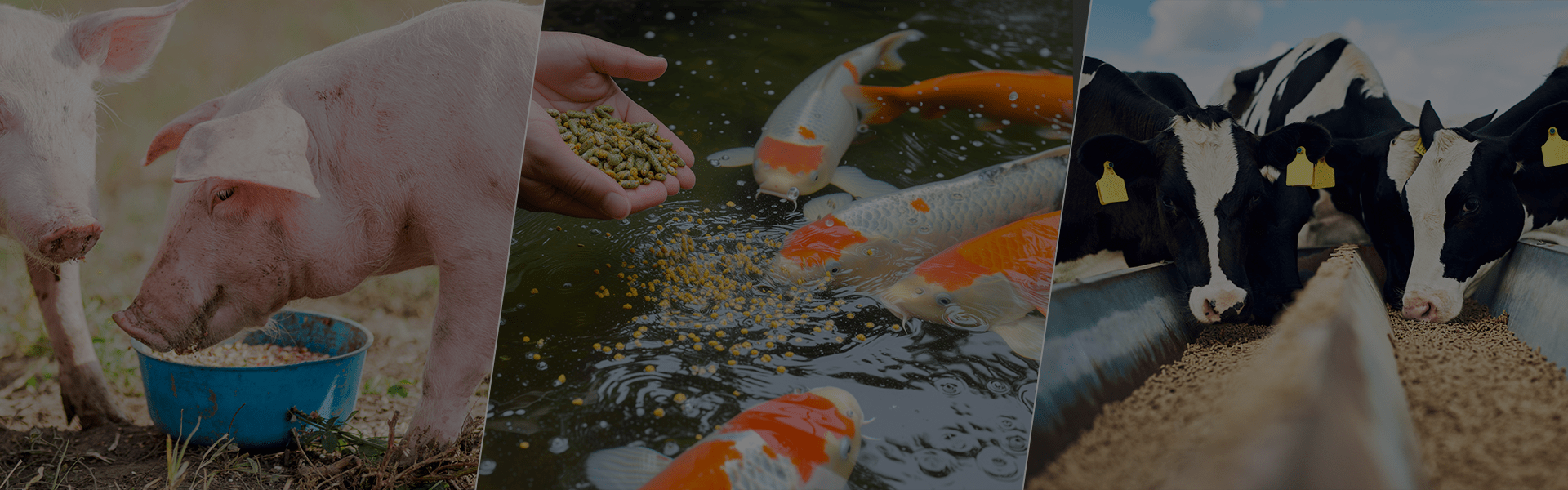
On the feed side, the bran and germ fractions that separate during corn dry milling go into cattle feed and enriched cattle feed. This is grain-based animal feed in its most direct form – the mill’s by-product becomes the feed manufacturer’s raw material. For buyers who source both food-grade corn grit and feed ingredients, an integrated processor like GrainSpan eliminates the need for two separate supply relationships.
Sustainable Grain Processing: Beyond the Label
Sustainable grain processing has become a phrase that appears in a lot of supplier decks without much substance behind it. In an actual processing plant, it means specific operational things.
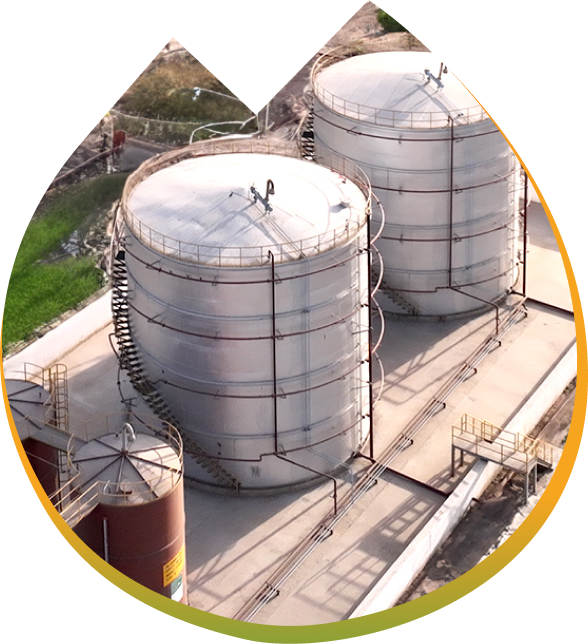
- Full kernel utilisation – corn grit, maize flour, germ oil, bran feed, and ethanol from the starch fraction all leave the plant as products. Nothing of commercial value goes to waste. GrainSpan’s integration of dry milling with grain-based ethanol production means the starch fraction not consumed by food-grade milling feeds our distillery, and the ethanol co-products – DDGS, food-grade CO2, and distilled corn oil – all recover commercial value.
- Zero liquid discharge – distillery effluent is treated and recycled within the plant rather than discharged to waterways. This is a regulatory requirement in several states and an increasingly common buyer audit criterion.
- CO2 recovery – fermentation produces large volumes of CO2 as a by-product. Venting it is the default at smaller operations. Capturing, purifying, and selling it as food-grade CO2 is what professional-scale grain-based ethanol and processing companies do.
These are not differentiators in the luxury sense. They are what serious buyers now expect to see when they audit a grain processing supplier.
Certifications: The Baseline and What Goes Beyond It
For any business choosing a rice milling service or maize processing company in India, certifications are the starting filter – not the final decision, but the first one.
FSSAI certification is the legal minimum for food-grade processing in India. ISO 22000 or FSSC 22000 confirms the supplier runs a documented food safety management system – hazard analysis, cleaning protocols, batch traceability, corrective action processes. For export buyers, APEDA registration is required. Halal and Kosher certifications matter for GCC, Southeast Asian, and certain Western markets.
GrainSpan holds FSSAI, ISO 9001, ISO 22000, FSSC 22000, Halal, Kosher, and APEDA registration across our facilities. These are not one-time achievements – they require annual surveillance audits and ongoing process compliance.
Beyond certifications, ask for batch CoA data from multiple recent production runs. A supplier confident in their process control will share these without hesitation. Tight variance across batches – moisture, particle size, fat content, mycotoxin levels – is the real indicator of a reliable processing partner.
Conclusion
Choosing a professional rice milling or maize processing company in India comes down to a straightforward question: can this supplier deliver consistent product, on time, to my specification, with the documentation my buyers require?
GrainSpan Nutrients supplies rice grit, rice flour, corn grit, maize flour, and grain-based animal feed ingredients from four milling facilities across Gujarat, Haryana, and West Bengal. We are FSSAI, ISO 22000, FSSC 22000, Halal, and Kosher certified, and APEDA registered for export. Our grain storage capacity of 75,000 MT supports supply continuity across seasons.
Contact GrainSpan Nutrients to request product specifications, certifications, or a pricing discussion for your volume requirements.
FAQs
- What is the difference between rice grit and rice flour?
Rice grit is coarsely broken endosperm screened to a specific size range – typically above 200 microns. Rice flour is milled finer, usually below 150 microns, and is used where smooth texture or fine coating performance is needed. Both come from the same milling process; particle size is the differentiator. - What is corn grit used for in food manufacturing?
Corn grit is used as the base ingredient for extruded snacks (puffs, rings, tubes), corn flakes and breakfast cereals, brewing adjuncts, pellet manufacturing, and weaning food formulations. The specific grit size required depends on the downstream process – extruder type, cooking method, and target product texture all influence the specification. - What does degermed mean in maize processing?
Degermed means the germ has been mechanically separated from the corn kernel before milling. The germ contains most of the kernel’s fat. Removing it produces corn grit and maize flour with fat content below 1%, which significantly improves shelf life and reduces rancidity risk compared to whole-grain milled products. - What grain-based animal feed ingredients come from corn processing?
The main feed ingredients from corn dry milling are cattle feed (the bran and germ fractions), enriched cattle feed (with added nutrients), and DDGS (distillers dried grains with solubles) from the ethanol co-production process. DDGS runs 26-30% crude protein and is used as a partial soya substitute in poultry, dairy, and ruminant rations. - Can GrainSpan supply both rice and corn products?
Yes. GrainSpan operates rice milling facilities in Kolkata and Haryana, and corn dry-milling plants in Ahmedabad and Gohana. Buyers needing both rice-derived and corn-derived ingredients can source from a single supplier with one quality system, one procurement relationship, and consolidated logistics.